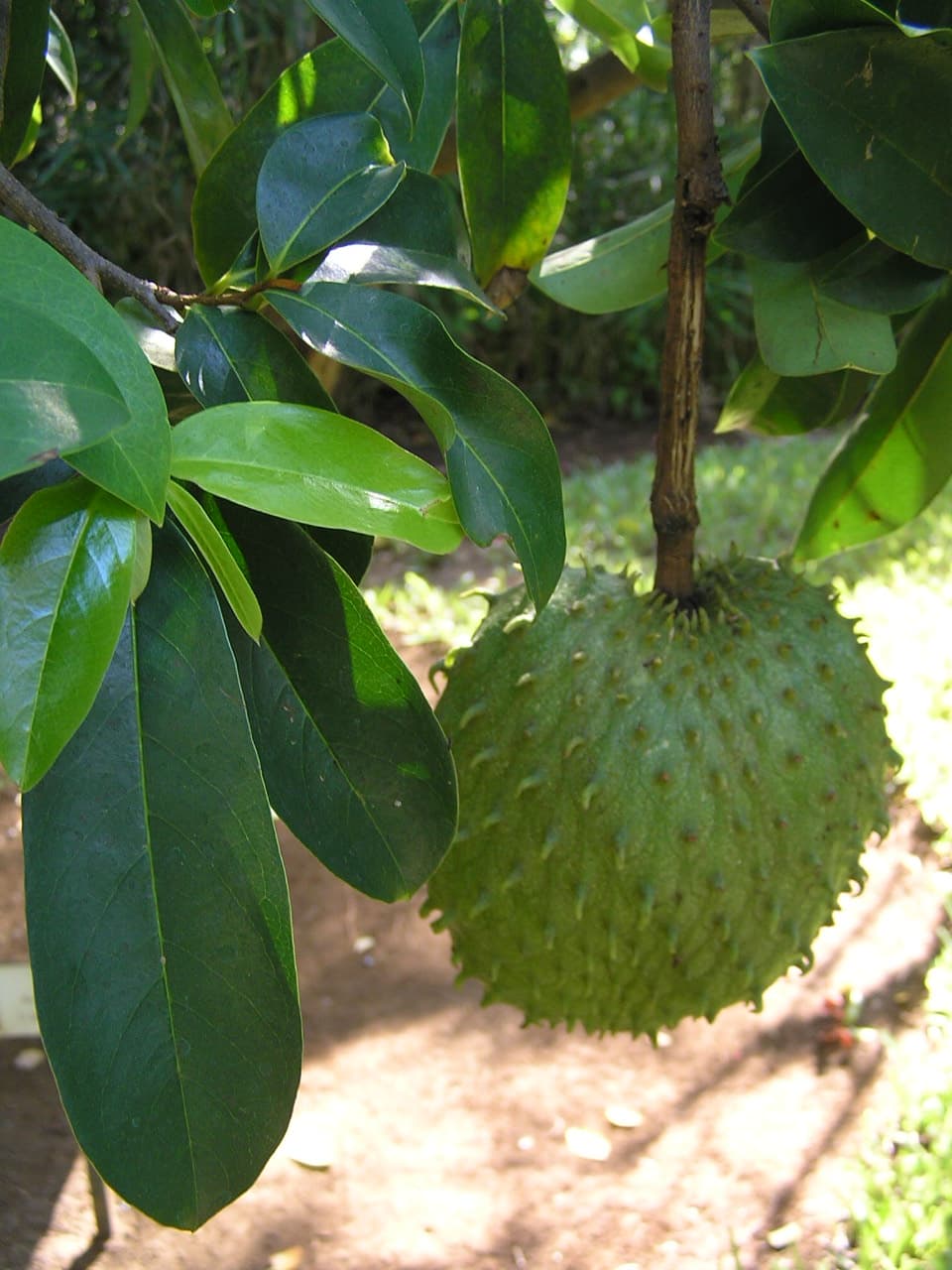
Soursop
Annona muricata
#Edible#Medicine#Sub Canopy
The Soursop, also known as Graviola, Guanabana, or Custard Apple, is a tropical fruit tree renowned for its distinctive flavor and numerous health benefits. Native to the tropical regions of the Americas, the soursop has gained worldwide popularity for its creamy, tangy fruit and medicinal properties.
Plant Characteristics
- Height: Soursop trees grow to a height of 5–8 meters (16–26 feet).
- Canopy Width: The tree has a spreading canopy measuring 3–5 meters (10–16 feet) in diameter.
- Leaves: Large, dark green, and glossy with a slightly leathery texture.
- Flowers: Pale yellow and fragrant, appearing directly on the trunk, branches, or twigs.
- Fruits: Oval-shaped with spiky green skin and soft, white, fibrous pulp containing black seeds. Fruits can weigh 2–5 kilograms (4–11 pounds).
Growing Soursop
1. Climate
- Thrives in tropical climates with temperatures between 24–30°C (75–86°F).
- Sensitive to frost and prefers areas with moderate humidity and rainfall.
2. Soil
- Prefers well-drained, fertile soil with high organic matter.
- Grows well in soils with a slightly acidic to neutral pH of 5.5–7.5.
3. Sunlight
- Requires full sun for optimal growth and fruit production.
4. Watering
- Needs consistent watering but cannot tolerate waterlogging.
- Mulching helps retain moisture and regulate soil temperature.
5. Propagation
- Propagated through seeds (takes longer to fruit) or grafting (faster fruiting).
- Seed-grown trees may take 3–5 years to bear fruit, while grafted trees may produce fruit within 2–3 years.
6. Maintenance
- Prune regularly to shape the tree and remove dead or diseased branches.
- Fertilize with potassium-rich fertilizers to enhance fruit production.
Nutritional Benefits of Soursop
Soursop is packed with nutrients that support overall health:
- Vitamin C: Boosts immunity and promotes skin health.
- B Vitamins: Essential for energy production and brain function.
- Potassium: Helps regulate blood pressure and support heart health.
- Dietary Fiber: Aids digestion and supports gut health.
- Magnesium: Supports bone health and muscle function.
Medicinal Uses
Soursop has been used in traditional medicine for centuries, and research supports its numerous health benefits:
- Antioxidant Properties: Contains phytochemicals that combat oxidative stress.
- Anti-inflammatory: Reduces inflammation and alleviates joint pain.
- Immune Support: High in Vitamin C, boosting the body’s defenses.
- Potential Cancer-Fighting Properties: Some studies suggest soursop extract may have anticancer properties, though further research is needed.
- Digestive Aid: The fiber and compounds in soursop promote healthy digestion.
Culinary Uses
The creamy, tangy flavor of soursop is a favorite in tropical cuisine:
- Fresh: Eaten raw by scooping out the pulp.
- Juices and Smoothies: Blended into refreshing beverages.
- Desserts: Used in ice creams, sorbets, cakes, and puddings.
- Teas: Leaves are brewed into herbal teas with calming properties.
Role in Tropical Forest Gardens
The soursop tree plays a significant role in tropical forest gardens:
- Mid-Canopy Tree: Serves as an excellent mid-layer tree in agroforestry systems.
- Shade Provider: Its canopy creates a cooler microclimate for understory plants.
- Wildlife Habitat: Flowers attract pollinators, and the fruit is a food source for birds and animals.
Ecological Benefits
- Erosion Control: Its root system helps stabilize soil.
- Pollinator Support: Attracts bees and other pollinators with its flowers.
- Sustainability: Fallen fruits enrich the soil with organic matter.